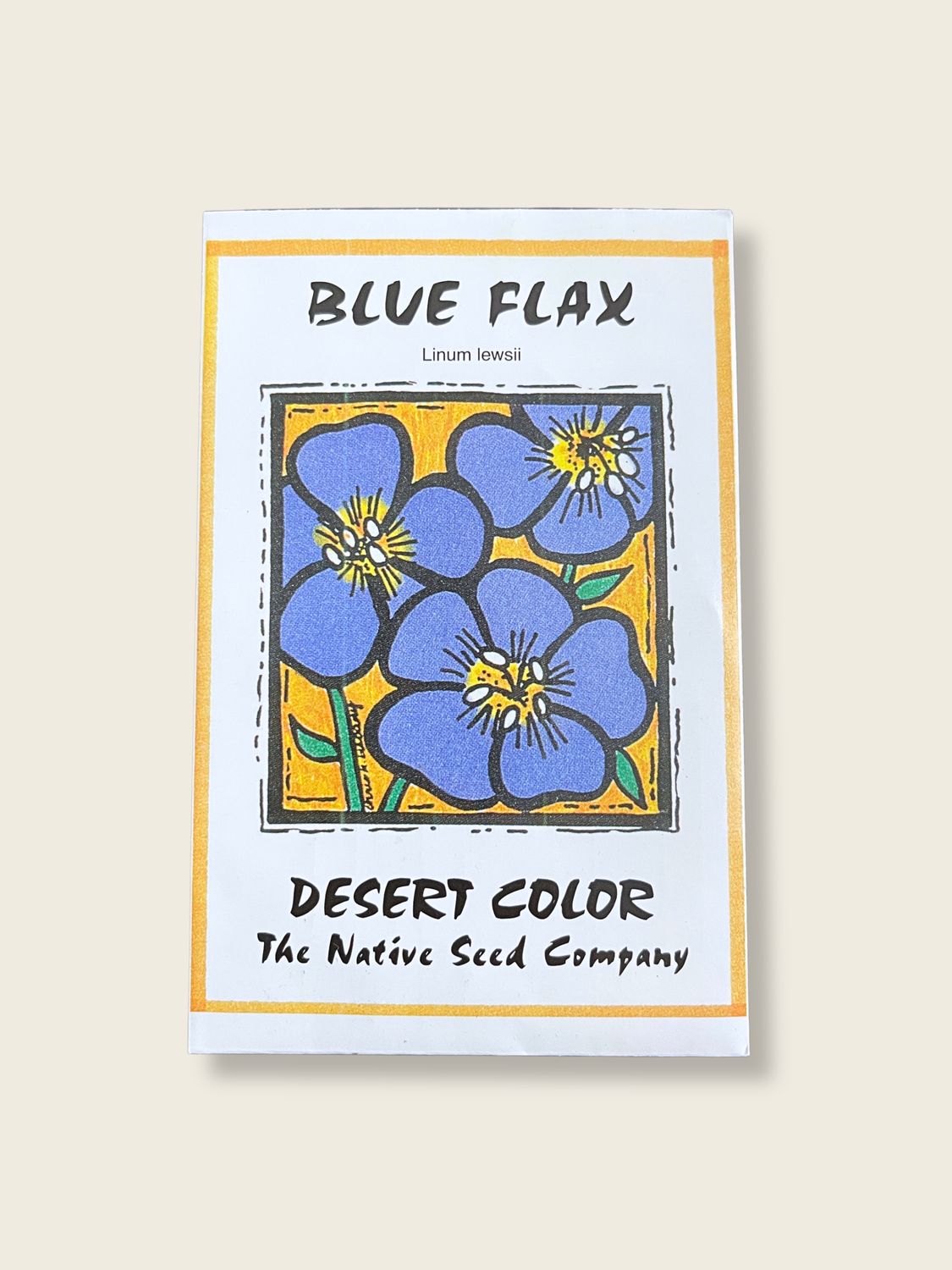
Blue Flax Seeds
$3.99
In stock: 7 available
Product Details
Blue Flax (Lewis Flax, Prairie Flax)
Scientific Name: Linum lewisii
Bloom Period: Late spring through summer; sky blue
Mature Height: 1–3 ft | Mature Spread: 1–2 ft
Planting
- When: Direct sow in late fall to early spring - late summer sowing is not recommended. Fall sowing gives seed a natural cold-stratification period, though blue flax doesn't strictly require it to germinate.
- Where: Full sun; dry, sandy, or gravelly soil. In rich, moist soil the plant tends to droop and sprawl, so avoid amending the bed or overwatering.
- How: Sow seed on top of the soil, pressed firmly but left uncovered - light aids germination. If lightly covering instead, keep it to about ⅛ inch deep. Keep evenly moist until germination, which typically takes 20–25 days.
- Note: Blue flax dislikes root disturbance, so it doesn't transplant well - direct sowing where you want it to grow is the better approach over starting indoors.
Growing Tips
- May bloom the first year if sown early enough in spring, but often waits until its second season to put on a full show
- Deep taproot makes it drought-hardy once established - avoid overwatering
- Blooms are famously short-lived day to day - flowers open each morning and drop by late afternoon, replaced by a fresh flush the next day
Care
- Cut back the top half of the plant after its first bloom flush to encourage a second round of flowers
- Self-seeds readily, so individual plants are short-lived but the colony persists year to year
- No serious insect or disease issues, though watch for slugs, snails, and aphids
Safety
- Toxicity: Generally considered non-toxic to dogs and cats, though like other flax species it contains trace cyanogenic glycosides in the leaves, sap, and seeds - a real concern in livestock-scale grazing, but not a meaningful risk from ordinary garden contact
- Pet Safe (Dogs): Yes for typical garden exposure - flax only poses a genuine risk in large, concentrated raw quantities, not from a dog brushing past or nibbling a leaf in the yard
Blue Flax Seeds